Slapstick Fighter - Fight Game
- 4.7
- Rating
- 10.00M
- Installs
- Free
- Price
 Analysis by App-foxy
I spent time with Slapstick Fighter as a mobile action game and came away with a fairly clear impression: it is built around quick, funny-looking stickman clashes rather than a deep fighting-game rulebook. The appeal is immediate. Characters swing, collide, lose balance, and tumble in ways that make even a short match feel lively. When a hit lands cleanly, the loose ragdoll movement gives the result more personality than a standard health-bar exchange.
That simplicity is also the key to deciding whether it suits you. I would recommend it to someone who wants a light fighting game for short sessions, especially if exaggerated knockouts and physical comedy sound more appealing than carefully memorizing long combos. I would not choose it for a serious competitive fighter, a story-heavy action game, or an experience that depends on highly precise visual and motor control.
How the game communicates what is happening
I focus here on how the game uses broad, exaggerated body movement to show the result of a clash. In my experience, that makes the action easier to grasp at a glance than a fighter built around subtle animations, though quick movement can still be hard to track. The next section looks at the effort that remains even when the visual language is simple.
You May Also Like

 Blood Strike: 2.5 Anniversary
Blood Strike’s Loadouts Turn Every Drop Into a Tactical Gamble
A close look at Blood Strike’s custom loadouts: how fast access to signature weapons reshapes its battle royale rhythm, rewards preparation, and narrows the gap between fights.

 Pandora - Music & Podcasts
Pandora’s Music Is Easy to Start, but Harder to Recover
Pandora’s strength is its low-effort path from a seed to a station. Its weak spot is how much confidence it asks you to place in connection, setup, and quiet recovery.

 8 Ball Pool
 Is Built on Rivalries, Rematches, and Routine
A close look at the rivalries, rematches, shared routines, and unanswered safety questions that turn a quick pool match into a persistent mobile community.

 Samsung Music
’s Quiet Strength Is Playing What You Already Own
Its reach comes less from spectacle than from dependable access to a personal library. That simplicity is both the app’s strongest retention engine and its ceiling.

 AccuWeather: Weather Radar
AccuWeather Review: A Quick, Clear Forecast for Everyday Decisions
For everyday plans, the best forecast is the one you can understand quickly. AccuWeather makes rain timing, radar, and local conditions easy to act on, with a few trade-offs.

 Hill Climb Racing
Why Hill Climb Racing Still Turns Crashes Into One More Run
A tiny car, a bumpy hill and one more upgrade: Hill Climb Racing keeps resurfacing because its simple chaos makes every near-miss feel personal.
More From Our News Desk



Readable action, but not always calm action
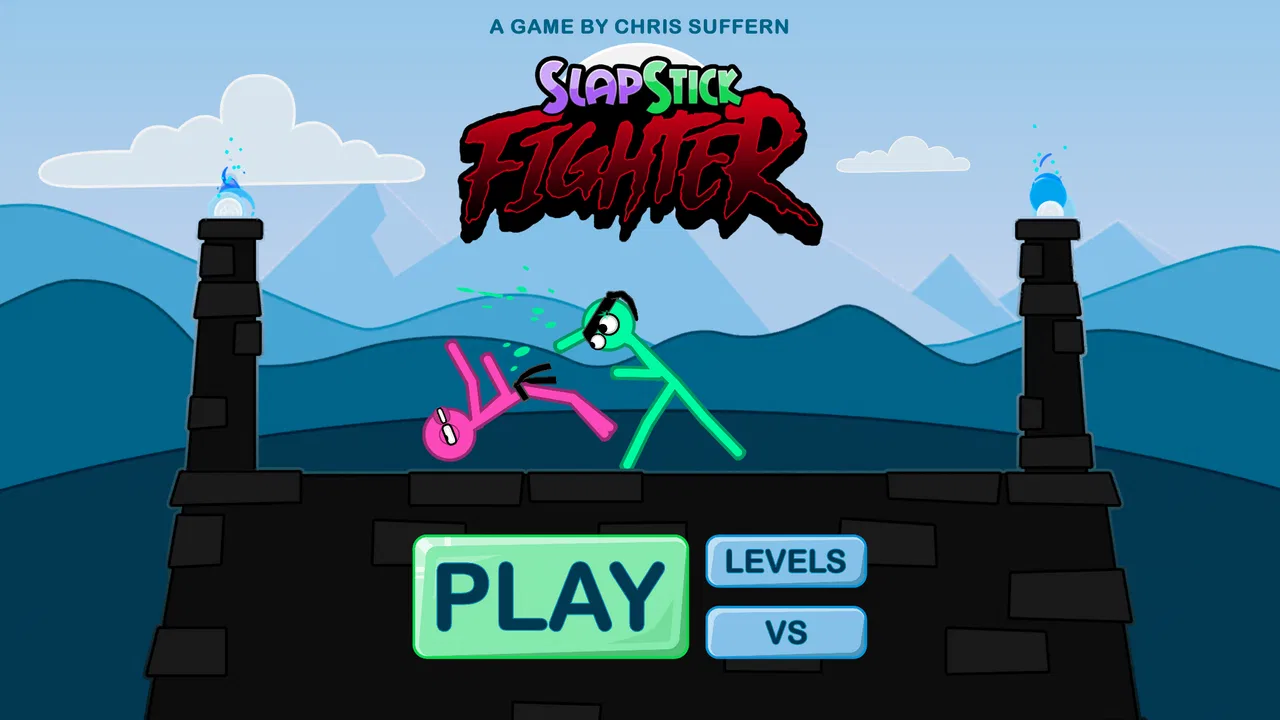
The stickman presentation keeps the screen visually uncluttered compared with many mobile action games. Characters are easy to distinguish from a detailed background, and the exaggerated body movement helps me understand when an attack connects or when a fighter has been knocked off balance. That matters on a small phone, where tiny character details can quickly become tiring to follow.
At the same time, the game’s humor comes from sudden movement. A fighter can go from standing normally to flying or collapsing in a moment, so the screen is not consistently calm or predictable. I found that entertaining, but players who need extra time to interpret motion may find the pace demanding. The visual simplicity helps with recognition; it does not remove the need to track fast changes.
The most useful way to approach a match is to watch the whole body rather than search for small animation details. Ragdoll reactions communicate the result of contact through posture, direction, and momentum. This makes the game easier to read than a realistic fighter in some situations, because the feedback is broad and exaggerated. It also means that a busy exchange can become visually chaotic when both characters are moving at once.
Navigation that favors quick experimentation
I found the overall concept easy to understand without treating it like a traditional fighting tutorial. The short description, “Slapstick Fighter,” is a good indication of the tone: the focus is on physical comedy and impact rather than a complex martial-arts simulation. New players can usually start by trying actions and observing what happens, which is a comfortable entry point for casual sessions.
That approach has a trade-off. If you prefer explicit explanations for every control, timing rule, and combat interaction, the game may feel less reassuring than a more instructional fighting title. The fun comes partly from discovering how movement and impact behave, but discovery is not the same as detailed guidance. I would spend a few early rounds learning the feel of the controls before judging my performance.
For players who have difficulty reading dense menus, the sparse stickman style may be less intimidating than a game filled with icons, character statistics, and layered equipment screens. However, visual simplicity should not be confused with universal clarity. A simple screen can still require fast attention, and the important action is happening during the fight rather than in a quiet menu.
What the presentation does well for different players
The game’s strongest communication choice is its use of obvious physical reactions. A heavy-looking knockdown is satisfying because the outcome is visible without needing a long explanation. This also supports players who learn through observation: after a few exchanges, I could connect a particular movement with a successful or unsuccessful action.
There is no need to rely on realistic textures or tiny facial expressions to understand the basic joke. The characters are deliberately abstract, so the main information comes from movement and impact. That can be helpful for players who find highly detailed action scenes distracting. The limitation is that visual feedback remains central, so anyone who cannot comfortably follow the screen will face a larger challenge.
Motor demands, sensory load, and playing conditions
I consider the physical and sensory side separately: following sudden motion is one demand, while reacting comfortably on a phone is another. I find that a brief trial is more informative than assuming the uncluttered stickman look will make every match easy. The next section turns to the kinds of everyday settings where that distinction matters.
Why the controls can feel approachable
Slapstick Fighter works best when I treat it as a game of timing, positioning, and reaction rather than a long sequence of memorized inputs. That lowers the mental barrier compared with fighters that expect players to remember elaborate command strings. Someone new to the genre can focus on what the opponent is doing and learn through repeated attempts.
Still, approachable does not mean effortless. Action games ask for quick responses, and ragdoll combat can make the exact moment of contact feel less formal than in a traditional fighter. If you have limited dexterity, tremor, fatigue, or difficulty holding a phone steadily, the repeated need to react during a match may become uncomfortable. I would approach it in short bursts and avoid gripping the device harder when a round becomes hectic.
A practical tip is to test the game when your hands are relaxed rather than beginning with a long session. The first few rounds tell you more than the store summary can: you can see whether the control rhythm feels manageable, whether the movement is easy to follow, and whether the physical comedy remains enjoyable after the novelty fades. If your hands tire quickly, this is not the kind of game I would force myself to play for extended periods.
Ragdoll comedy is both a strength and a source of friction
The loose-body knockouts are the game’s defining personality. They make losing less frustrating because a failed exchange can still produce an amusing result. In my experience, that tone is useful for casual players who want action without taking every round seriously. A match can become a small comedy scene rather than a test of perfect execution.
For players sensitive to rapid motion, repeated falls, or sudden visual changes, the same feature may be tiring. The action is not presented as a quiet turn-by-turn exchange. Bodies move in exaggerated ways, and the screen can demand attention from one moment to the next. I would choose a stable viewing position, keep the device at a comfortable distance, and take breaks if the movement starts to feel unpleasant.
Sound can also affect how comfortable the experience feels, even though the visual action is the main attraction. If you are playing in a shared space, on public transport, or late at night, muted play may be preferable. The game is still understandable through the animation, but removing sound can reduce some of the impact and make the experience feel less lively. That is a reasonable trade when the situation matters more than full immersion.
Short sessions make it easier to fit around real life
One of the most practical strengths is how naturally this kind of action game fits into spare moments. I can imagine playing a few rounds while waiting for an appointment, taking a break from study, or relaxing after work without committing to a long story mission. The slapstick tone also makes it easier to stop after a frustrating round instead of feeling that I have abandoned a major objective.
That convenience has a limit. If you are looking for a game that rewards slow planning, exploration, or a substantial narrative, this is the wrong shape of experience. It is better as a compact burst of interaction. Players who need frequent pauses may appreciate that structure, while players who want a long, absorbing campaign may find the lightweight format too narrow.
Situational access and everyday use
I look at when a short, visually direct match fits naturally into a day, and when the surrounding setting can make it less comfortable. A quiet pause with the phone held steadily is a different proposition from trying to play while moving or splitting attention. The next section weighs the barriers that remain even in a convenient setting.
A good fit for casual mobile play
I think the best everyday scenario is a short, low-pressure break. Imagine having ten minutes before a train arrives: a few matches give you something active to do, and the exaggerated knockouts provide an immediate payoff. You do not need to remember a large story context before starting again. That makes the game more convenient than a campaign-based action title when your attention is divided.
It can also work well as a shared laugh between friends, provided everyone is comfortable with the fast action and the control demands. The physical comedy gives people something to react to even when they are not deeply invested in fighting-game technique. I would describe it as a better choice for playful competition than for proving who has mastered a strict tournament system.
Because it is free to download, the barrier to trying it is low. The developer is Cybernate Pty Ltd, and the game has reached over ten million installs with an average rating of 4.7 from around one hundred twenty thousand ratings. Those figures suggest that the broad, accessible premise has found a substantial audience, though popularity alone does not guarantee that its movement or control style will suit every player.
When device and environment matter
The game is listed for Android six and later, which makes it available to people using a wide range of Android devices. That is useful if you are not carrying a recent phone, but compatibility is not the same as identical comfort on every screen. A smaller display may make action harder to follow, while an older or less responsive device can make any fast game feel less pleasant. I would judge it on the phone you actually intend to use rather than assuming the experience will match a newer handset.
Playing in bright sunlight can also change how easily you read the action. A simple silhouette is helpful, but glare can still make movement harder to distinguish. In a quiet room, you may be able to concentrate on timing; in a noisy environment, visual cues become more important. This is why I see it as flexible for location but not completely indifferent to conditions.
The Teen content rating is worth considering for families. It tells parents and younger players that this is not positioned as a small-child game. The cartoon presentation may look harmless at first glance, but the action is still built around fighting and knockouts. I would check whether that tone fits the player before handing over the phone, rather than relying only on the stickman art.
Free entry, with a purchase decision to think about
The game costs nothing to start, while in-app purchases are listed at $3.49 per item. For me, that makes the sensible approach simple: try the core experience first and decide whether it remains enjoyable without spending. A free entry point is especially useful for players who are unsure whether ragdoll fighting will hold their attention.
The important trade-off is not the existence of purchases by itself, but how you feel about optional spending in a quick-session game. If you prefer a single upfront purchase with a clearly finished package, a paid fighting game may feel more comfortable. If you like sampling a game before deciding whether it deserves money, this model is less risky at the beginning. I would set a personal spending limit before making any purchase, particularly on a shared device.
Where the experience still creates barriers
I end by separating the game’s welcoming presentation from the demands of its actual play. Its physical comedy can make outcomes understandable, but fast reactions and screen-focused attention may still rule it out for some people. The next section considers which players are better served by a slower or more structured alternative.
Fast reactions remain the central hurdle
The biggest barrier is not the stickman art or the basic premise. It is the need to observe movement and respond while the fight is already unfolding. Players with slower reaction times, limited hand mobility, or difficulty coordinating several actions may find the game demanding even if the presentation looks simple.
This is also where it differs from slower action alternatives. A turn-based combat game gives you time to inspect choices, while a conventional strategy game lets you plan around a broader battlefield. Slapstick Fighter asks for immediate engagement. If your preferred way to play is deliberate and pause-friendly, I would choose one of those alternatives instead.
There is a useful distinction between learning difficulty and physical difficulty. Replaying rounds may help you understand the timing, but practice cannot remove every motor limitation. I would not interpret repeated failed inputs as a lack of skill until I had checked whether the control rhythm itself was comfortable. Sometimes the right decision is to stop rather than keep pushing through an uncomfortable session.
Visual clarity has practical limits
The uncluttered characters make the game easier to recognize, but the action still depends on seeing bodies move across the screen. Players with low vision or sensitivity to rapid animation may need a larger display, better lighting, or shorter sessions. I would avoid playing while walking or doing another task, because divided attention makes the sudden knockdowns harder to follow and increases the chance of dropping the phone.
Players who rely heavily on audio cues should also be cautious about treating sound as a substitute for the visual action. The core joke and the main combat feedback are expressed through movement. In a loud place, muted session, or situation where you cannot comfortably look at the screen, the game loses some of its usefulness. That does not make it inaccessible to everyone in those settings, but it does make the context important.
Who should choose another type of game
I would steer away from this title if your priority is a detailed competitive ruleset, a carefully written campaign, or a large amount of character customization. Its identity is physical comedy and immediate action. A traditional fighting game may be better for players who want precise frame-based practice, while a story-driven action game may be better for someone who wants exploration and progression to carry the experience.
I would also hesitate to recommend it to someone who dislikes knockouts presented as humor. The slapstick style is not a small decoration; it shapes the whole experience. If you prefer serious combat animation or dislike unpredictable-looking ragdoll movement, the game’s main attraction may become its main annoyance.
My inclusive verdict after using it
Slapstick Fighter is at its best when the player wants a free, compact action game that turns fighting into visual comedy. The stickman design keeps the basic scene understandable, the knockdowns give every exchange a strong physical payoff, and the short-session nature makes it easy to fit into ordinary breaks. The current version is 3941.8.2, and the game’s established audience shows that this straightforward idea has broad appeal.
My recommendation comes with a clear condition: treat it as a playful reaction game, not as a universal fighting solution. Its presentation may be less intimidating than a realistic fighter, but the motor and visual demands remain real. Players who need slower pacing, more deliberate planning, or a quieter sensory experience should look toward turn-based or strategy alternatives instead.
For someone asking me whether to install it, I would say yes if you enjoy quick matches, comic physics, and learning through experimentation. I would suggest trying it in a comfortable seated setting, starting with brief sessions, and deciding early whether the movement feels entertaining or tiring. Since the game is free to begin, that test costs little, while the Teen rating and per-item purchases are useful reminders to consider the player and the device owner before going further.
My final view is that its strongest inclusive quality is its readable physical humor, while its biggest limitation is that readable does not mean low-demand. It welcomes casual players through a simple visual language, but it still expects attention, timing, and comfortable phone handling. If those conditions match your situation, the game can be a funny little break from routine. If they do not, choosing a slower or more structured alternative will likely be the more enjoyable decision.
FAQs for Slapstick Fighter - Fight Game
01What is Slapstick Fighter - Fight Game about?
Slapstick Fighter - Fight Game is a humorous and action-packed mobile game that combines slapstick comedy with intense fighting mechanics. Players engage in battles using exaggerated physics and comical animations. The game offers various modes, including single-player and multiplayer, allowing users to enjoy both solo and competitive experiences.
02How are the controls and gameplay mechanics in Slapstick Fighter?
The controls in Slapstick Fighter are intuitive, featuring simple touch gestures that make it easy to perform attacks and maneuvers. The gameplay mechanics focus on slapstick-style combat, with over-the-top animations and physics-based movements that add a layer of comedy to the action. This makes it accessible for players of all skill levels.
03Does Slapstick Fighter offer multiplayer options?
Yes, Slapstick Fighter includes multiplayer options that allow you to compete against friends or other players online. The multiplayer mode enhances the fun by introducing a competitive element, where players can test their skills and strategies against others, adding replayability and social interaction to the game.
04Are there any in-app purchases in Slapstick Fighter?
Slapstick Fighter does offer in-app purchases that allow players to enhance their experience. These purchases may include cosmetic items, additional characters, or special abilities. While they are optional, they provide a way to customize gameplay and support the developers. Players can enjoy the core game without making purchases.
05What devices and operating systems are compatible with Slapstick Fighter?
Slapstick Fighter is available on both Android and iOS platforms, making it accessible to a wide range of devices. The game is optimized to run smoothly on most smartphones and tablets, ensuring a consistent experience across different hardware configurations. Ensure your device meets the minimum system requirements for optimal performance.
Pros
- Smooth and intuitive controls.
- Engaging physics-based combat.
- Variety of challenging levels.
- Unique character designs.
- Offline play available.
Cons
- Limited character customization.
- Can be repetitive over time.
- Occasional minor bugs.
- Ads can interrupt gameplay.
- In-app purchases for progression.

Slapstick Fighter - Fight Game
Gallery